It started over lunch. A colleague asked me which countries I would genuinely want to live in forever – not for visa convenience or salary, but for life. Instead of the usual answers – healthcare, weather, economy – I gave him three words: Language. Food. Cars.
He laughed. I explained. By the time the food arrived, four people around the table had pulled up their phones and were debating rankings. The framework had taken hold.
I want to be clear upfront: this is not a serious academic study. There are vastly more important factors in evaluating a country – education, healthcare, political stability, human rights, infrastructure, social welfare. Anyone building a real picture of a nation must consider all of those. But this is the fun version. The lunch table version. And the surprising thing is – it is not as shallow as it sounds.
What Each Lens Actually Measures
The three questions sound simple. They are not. Each one is a proxy for something deeper about a culture – its values, its priorities, and how it sees the relationship between work, family, and identity.
Notice that none of the three lenses are about money. A country can be wealthy and score poorly on all three. A country can be modest and score brilliantly. The framework is about culture, not GDP.
My Top Five
After more than two decades living and working across Pakistan, Japan, and Germany – and visiting dozens of countries in between – five nations consistently rise to the top when I apply this framework. Here is the at-a-glance picture, followed by the reasoning behind each.
Food: Japanese cuisine is philosophy made edible. Ramen broth that simmers for eighteen hours. Sushi rice seasoned to a temperature of 37°C – body temperature – so it does not shock the fish. Katsu cooked to a precise internal crunch. Every dish is a meditation on care. The Japanese concept of kodawari – an obsessive devotion to craft – lives most visibly in the kitchen. This is not food prepared to satisfy hunger. It is food prepared to honour the person eating it.
Cars: Toyota did not just build reliable cars. They built the manufacturing philosophy the rest of the world now teaches in business schools – Kaizen, the Toyota Production System, Just-in-Time delivery. Honda, Nissan, Mazda – each represents a different philosophy of engineering, but all share the same cultural DNA: make it right, make it last, improve it continuously. Japan set the global standard for what a car should be.
Food: German food is honest rather than complex. Schweinshaxe, Sauerbraten, Flammkuchen, Brezeln – hearty dishes built for cold climates and long table conversations. The slow-cooked Schmorbraten on a Sunday is very much a family ritual. The score here is not low because the food is bad; it is moderate because the cuisine does not carry the same depth of cultural philosophy as the other two countries in this list. Satisfying. Reliable. Exactly what you would expect from Germany.
Cars: BMW. Mercedes-Benz. Porsche. Volkswagen. Audi. No other country concentrates this much automotive engineering ambition in one place. Living in Germany, I learned that cars here are not a status symbol – they are a craft object. Engineers at these companies treat tolerances the way watchmakers treat gears. The Autobahn did not produce fast cars; fast cars produced the Autobahn. This is what a 5/5 looks like.
Food: Italian food scores a perfect five not because of pizza and pasta – though those are extraordinary – but because of what they represent. A real ragù simmers for four to six hours. Nonna's recipe is not written down; it lives in her hands and in the kitchen on Sunday morning. Italian food is the strongest argument in this entire framework for food as a proxy for family values. The time invested in cooking is the time invested in each other.
Cars: Ferrari, Lamborghini, Alfa Romeo, Maserati, Lancia. Italy approaches car design the way it approaches fashion – as an art form. Italian cars are not engineered; they are sculpted. The four misses this lens slightly because the reliability history of Italian cars is famously complicated, and craftsmanship that does not last is only half the story. But for sheer beauty, ambition, and cultural expression through automotive form – Italy is incomparable.
Food: Indian cuisine is regional to the point of being hundreds of cuisines wearing one name. A Punjabi kitchen and a Keralan one share almost nothing but ambition: spices ground by hand, dals left to simmer slow, the family meal treated as a daily act rather than a weekly occasion. Few cultures fold this much craft into ordinary cooking.
Cars: India builds at enormous scale, and Tata and Mahindra are serious engineering houses; Tata even owns Jaguar Land Rover. But the homegrown badge has not yet earned the global reputation for craft the names above carry. The ambition is unmistakable. The reputation is still being built – and on current trajectory, it will be.
Food: France did not just cook well; it wrote the rules everyone else cooks by. The brigade kitchen, the mother sauces, the restaurant itself, the Michelin star, and the very idea of terroir – that where a thing is grown is part of what it is – are all French. The long Sunday lunch sits close to sacred. This is food raised to a national philosophy.
Cars: Renault, Peugeot, Citroën, and at the summit Bugatti – the most extreme statement of what a car can be. French cars have always leaned toward flair and comfort over German precision, which is the only reason this lands at four rather than five. The artistry and the ambition were never in question.
What This Framework Is Really Saying
When you look at all five together, a pattern emerges that has nothing to do with language, food, or cars individually. Each is a culture where craft is taken seriously as a moral position. Not just as a competitive advantage. Not just as a professional skill. As a statement about who you are.
The way a nation builds its cars is the way it does everything else.
In Japan, a ramen chef who has spent thirty years perfecting one dish is not considered eccentric – he is considered honourable. In Germany, the engineer who re-machines a component because the tolerance was 0.03mm off, when no one would have noticed, is not called a perfectionist – he is called a professional. In Italy, the grandmother who refuses to use a shortcut in her ragù because it would dishonour the recipe is not called old-fashioned – she is called the keeper of something important. In France, the chef who pours away a sauce that broke rather than send it out is not being wasteful – he is keeping faith with the meal. In India, the cook who grinds the masala fresh that morning rather than reach for the jar is not being inefficient – she is refusing to let a shortcut stand in for care.
Five countries. Three domains. One underlying value: the refusal to do things carelessly.
That, ultimately, is what the Language-Food-Cars framework is measuring. Not how convenient or beautiful a country is to visit. But whether its culture, at the deepest level, believes that doing things well – really well – matters.
Pakistan scores beautifully on two of the three. Food – nihari, biryani, haleem – dishes that simmer for hours, that carry generations of memory, that are inseparable from family and gathering: a strong 5/5. Language – Urdu is among the most poetic languages in the world, a language of warmth, wit, and extraordinary lyrical depth: 5/5 without hesitation. On cars, Pakistan's domestic auto industry is growing, but has not yet built the global reputation this lens requires. This framework is not a judgement on the country – it is a snapshot of the current state of one particular dimension of industrial culture. And on the two dimensions that matter most to daily life and human connection, Pakistan stands with the very best.
There is also a deeper reason this framework feels personal when it reaches Pakistan. Pakistani identity is a blend – the subcontinental, Indian roots it shares with its neighbour, a Muslim value system layered over them, and the ideology the nation was founded on. That blend is exactly what shaped the food, the culture, and the language. Urdu is the clearest proof of it: subcontinental in its bones, Persian and Arabic in its script and its poetry. The biryani on the table and the couplet on the tongue are the same fusion – one made edible, the other made audible.
The next time someone asks you to compare countries, try the three questions. You will be surprised how quickly they cut through the noise – and how much they reveal about what a culture truly values beneath the surface.
Pakistan Is Not a Country You Can Score. It Is One You Have to Feel.
I have left my own country until last, and almost unscored, on purpose – because Pakistan is not a place you can put in a column. It is one you have to walk into. Under a single flag sit a dozen peoples, each with its own tongue, its own table, its own music, its own thousand-year memory. And somehow the whole of it holds together as one nation.
What holds it is a river. The Indus falls out of the northern glaciers, gathers the five waters of Punjab, and runs the entire length of the land down to the sea. Trace it on a map and you are drawing the country's spine. Everything that follows grew along its banks.
And it grew for a very long time. Mehrgarh was farming the Balochistan plain nine thousand years ago. Harappa and Mohenjo-daro raised planned brick cities along the Indus while much of the world was still villages. Gandhara, near Taxila, carved some of the first images of the Buddha. Civilisation upon civilisation, all of it strung along the same water.
Here are a few of its living threads.
Rising Punjab and setting Punjab, one people the 1947 line cut in two. Saag and makki di roti, the thunder of the dhol, and a Sufi tradition that gave the world Bulleh Shah and Waris Shah's Heer. Iqbal was born on this soil.
The land of the lower Indus, and of the Sindhis who live on both sides of the border. Sindhi biryani, the deep crimson of the ajrak, and the Sufi song of Shah Abdul Latif Bhittai. Mohenjo-daro sleeps beneath its dust.
One people across the Afghan line. Chapli kabab and Kabuli pulao, the rabab and the whirling attan, and Pashtunwali, whose very first law, melmastia, is hospitality to any guest who arrives, even a stranger.
The vast, sparse southwest. Sajji roasted whole over open coals, the cry of the suroz, and a tribal code that turned welcome into a point of honour the desert could not wear down.
Spoken in the Baloch hills and Dravidian at its root – a single startling thread that ties these dry mountains to the far south of India, thousands of years deep.
The uplands around Rawalpindi, where Taxila and the Greco-Buddhist art of Gandhara flourished two thousand years ago, where East met West long before anyone gave it that name.
The divided valley. Rogan josh and the slow ceremony of the wazwan, noon chai poured pink, and Sufiana kalam drifting over some of the most beautiful and most contested mountains on earth.
The peoples of the high valleys under the roof of the world. Balti is a Tibetan tongue, carried down with apricots, mamtu dumplings, and folk songs older than any border.
When the plains turn to a furnace in summer, 45 to 50°C across Punjab and Sindh, the whole country looks the same way: north. To the cool valleys of Hunza, Skardu, and Swat, where the air thins and the apricots ripen on the branch. And above them stands the reason the north exists at all, the greatest gathering of high mountains on earth. K2, the second-highest point on the planet at 8,611 metres, rises here. Of the world's fourteen peaks above 8,000 metres, five stand in Pakistan – K2, Nanga Parbat, and the Gasherbrum and Broad Peak giants. And here, three of the world's great mountain ranges meet: the Karakoram, the Himalaya, and the Hindu Kush, colliding within sight of one another. It is where Pakistanis go to feel how small they are.
And still more beyond these – Saraiki, Hindko, the Hazara, the Kalasha of the high valleys with their own ancient faith. Each its own world.
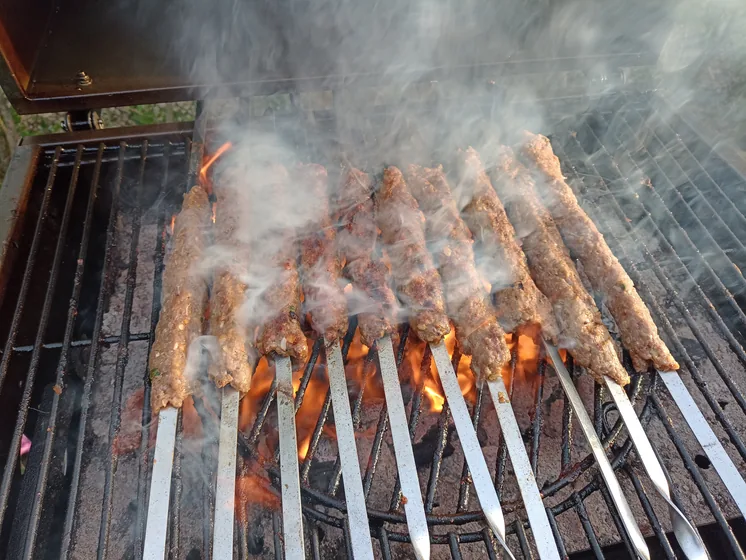
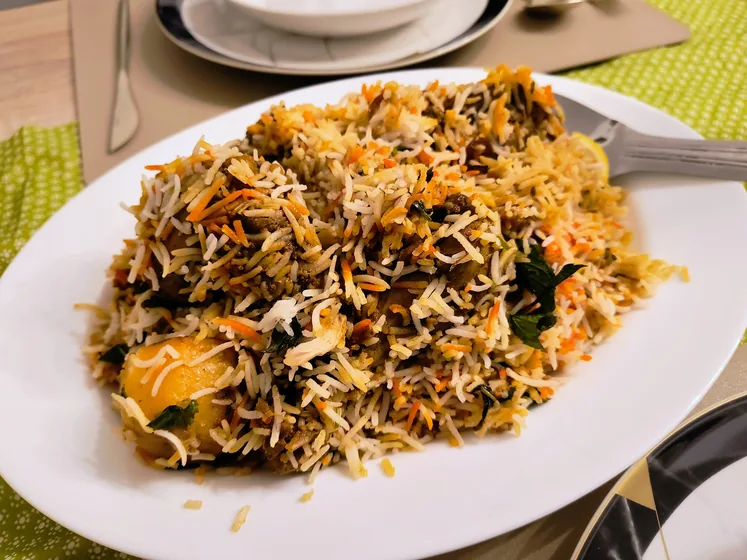
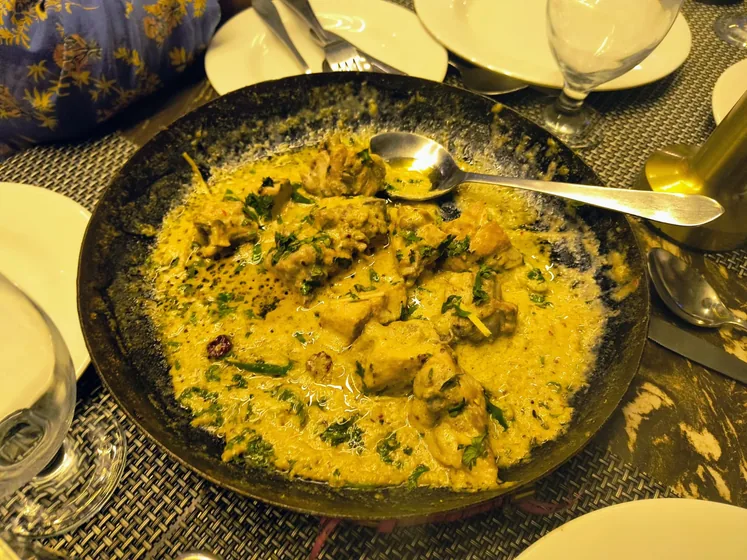
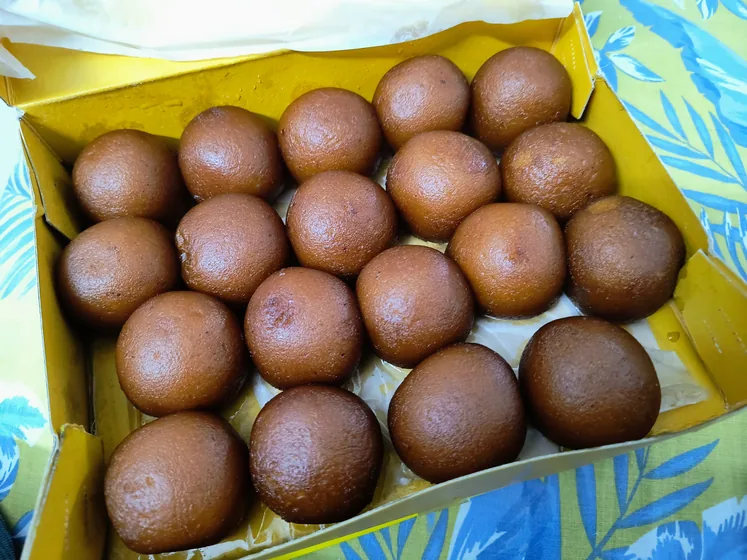
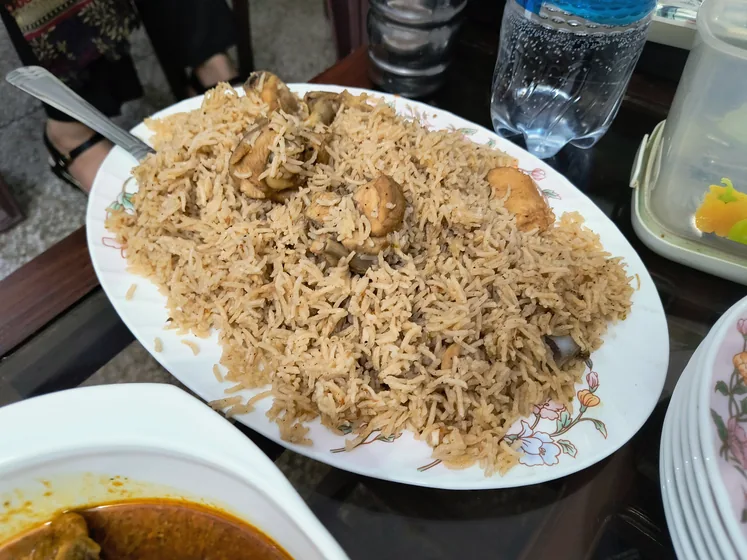
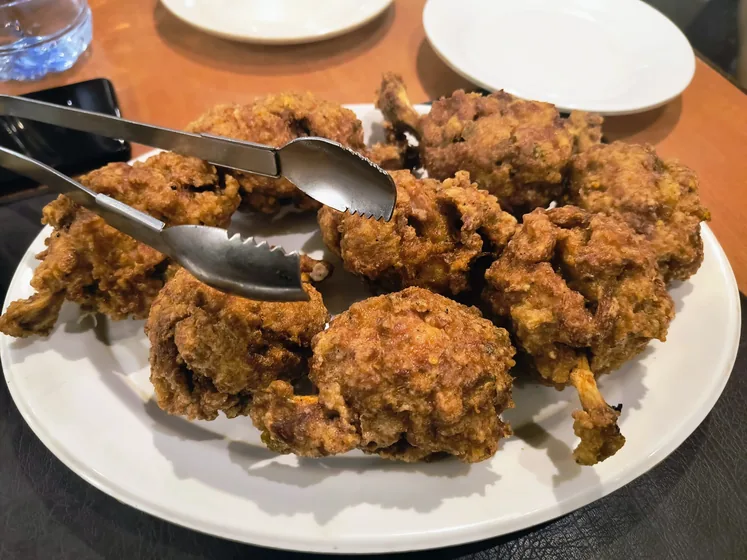
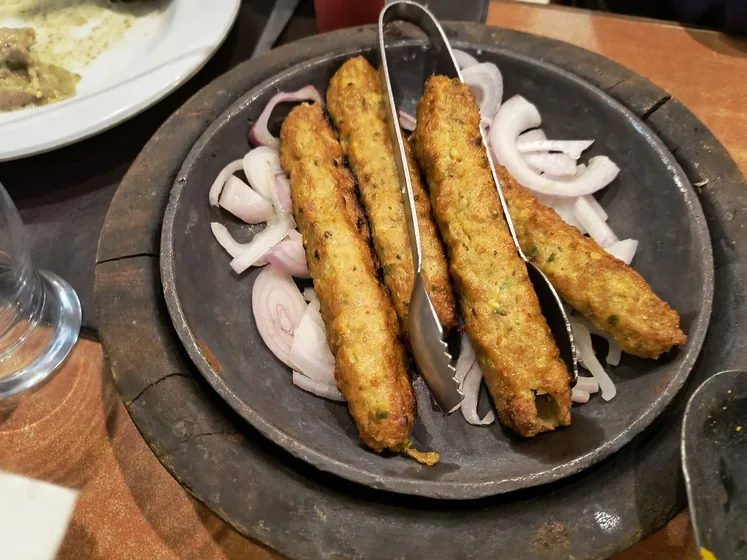
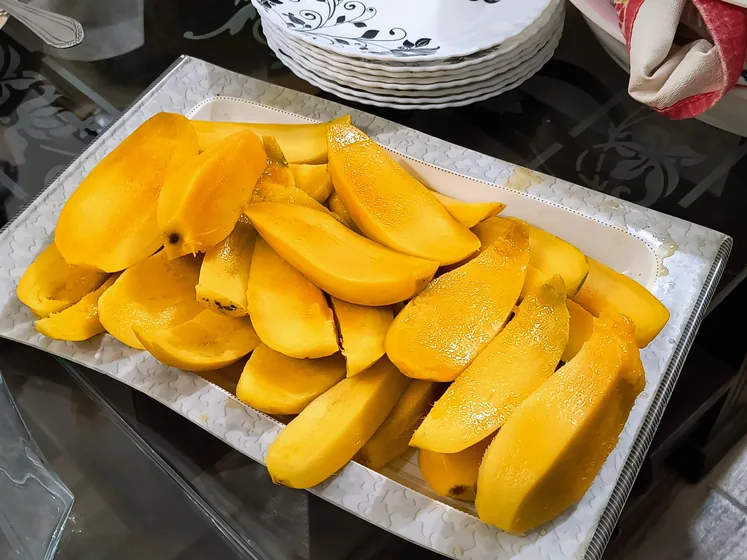
Drop any one of them into the framework and you would get a different answer for food, for language, for music. But here is what no column can hold. In the two things that matter most, every one of these peoples is the same: hospitality and resilience. A Pashtun will give a stranger his finest meal and apologise that it is not more. A Sindhi will not let you leave his door unfed. A Punjabi grandmother will overfeed you and be quietly hurt if you try to stop. Whatever the ethnicity, the welcome is total – and the strength to keep that welcome warm through everything history has thrown at this land is total too.
This whole piece is about craft taken seriously as a moral position, and there is more than one place to put that craft. Ours did not go into steel and tolerances and the perfect closing of a car door. It went into the welcome – grown from the soil of the subcontinent, deepened by a faith that treats the guest as a gift from God. We may not build the world's cars. But that gap is more than covered, because what we make instead is something a machine never will.
We may not build the world's cars. But no one on earth builds a welcome like we do.
You will only ever believe that once you have sat at one of our tables. So come. Let us prove it.