It does not feel like a discovery. It feels like a crack you notice in a wall you have leaned on for years, and the slow, sinking understanding that it was always there, spreading quietly, while you stood admiring the paint. For most of a decade I carried one man in my head under a single word: mentor. He had shaped how I think. He had, I believed, wanted me to grow. The realisation that he was also something else came late, and then all at once, and it landed like a punch to the gut.
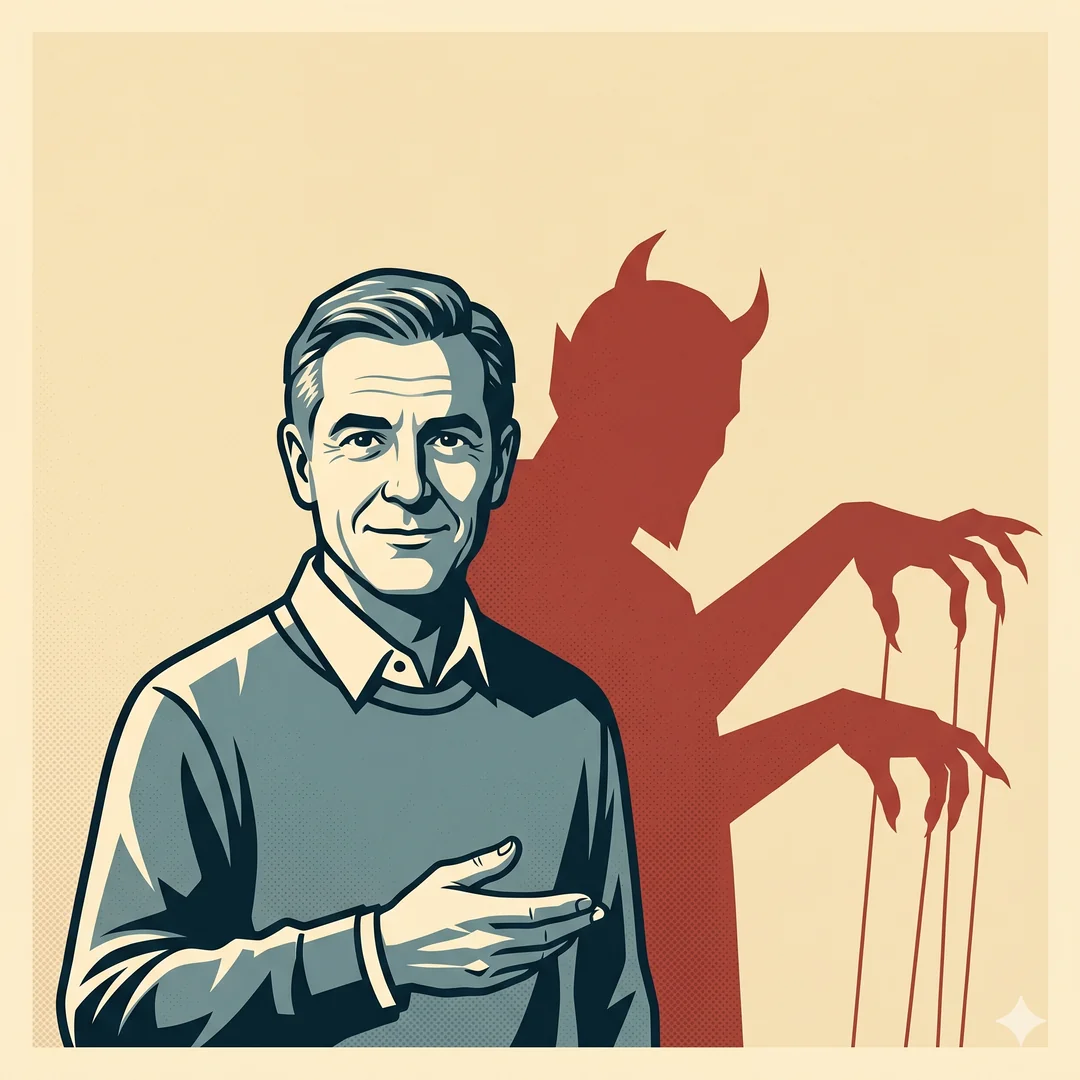
When someone who shaped your thinking turns out to be a narcissist, it forces two feelings to occupy the same space at once: gratitude and betrayal. They do not take turns. They arrive together and refuse to resolve, and you are left turning the same questions over at two in the morning. Was any of the mentorship real? Did he actually care, even a little? Or was I just useful, a steady supply of the admiration he needed, a praise-minion who kept the mirror polished?
What Was Real
The honest answer is the uncomfortable one. A lot of it was real. He did teach me. He did open doors in my thinking that I could not have opened alone. This is the part the cautionary tales leave out, and it is the part that matters most, because it is what makes these relationships so hard to walk away from. A narcissist can still be a genuine teacher. They can still inspire you, stretch you, see something in you before you see it yourself. If they could not, no one would follow them, and they would never reach the rooms where the real damage gets done.
What finally broke the spell was not a single betrayal. It was growth. As I came into my own, found my own footing and eventually my own teams, I finally had something to measure the relationship against, and the measurement was not kind. You often cannot see the true shape of a thing until you have stepped far enough outside it to get some light around it. That is why it took me the better part of ten years.
The Cost You Pay Late
The cost is real too. You simply do not see it arriving, because it never comes as a bill. It comes as erosion. Your sense of your own worth gets chipped away by corrections that always seem reasonable in the moment. Your achievements get quietly tangled up in their approval, until you can no longer tell whether you are proud of the work or proud that they were pleased with it. Your independence softens under their certainty, one deferred judgment at a time, until one day you notice you have stopped trusting your own read of a situation without first checking it against theirs.
None of these moments is dramatic. That is exactly why they work. There is no single scene you can point to, no line that was clearly crossed, just a slow rebalancing of the relationship in their favour that you keep explaining away. By the time the picture is finally clear, years have gone by, and a part of what you built in those years has their fingerprints on it in ways you would rather it did not.
The Faces That Reach the Top
Here is the part that should worry anyone building a company. The people who do this are very often the ones who rise. The same charm that won me over wins interviews, boardrooms, and promotions. The ability to perform care is, from any distance, almost indistinguishable from actually caring, and distance is where most senior decisions get made. So the two-faced end up in key positions, trusted by the people above them and quietly braced-for by some of the people below, who learn early that there is a public face and a private one, and that only a few of you will ever meet the second.
The tyrant who shouts gets caught; his damage is on the surface where HR can find it. The charming one with a shadow rarely does, because the only evidence is a pattern, and a pattern is hard to bring to a meeting. Naming it, plainly, to yourself, is most of the defence you get. Not to win an argument with anyone else, but so that you stop gaslighting yourself out of what you can clearly see.
The Benchmark
After all of it, I am left with one thing I actually kept. Not a technique, not a maxim I quote. A benchmark. I know now, with a precision I could not have reached any other way, exactly the kind of person in authority I refuse to become. I have spent the years since trying to be the opposite for my own teams, to put their safety ahead of my own standing, and I have written, painfully, about how badly I needed to learn that the first time, back when my own team feared me and someone had to tell me to my face.
The good mentors I have had since all share one quiet trait. They give you back to yourself. They make you more able to stand without them, and they are glad when you do. The other kind keeps you, and calls the keeping mentorship. That is the whole test, and I did not own it until I watched someone fail it.